 Should you need urgent health advice please contact your GP or call NHS 111. In an emergency please visit A&E or call 999
To prepare powdered infant formula safely, you must use freshly boiled tap water that has cooled to no less than 70°C. Because powdered infant formula is not sterile, using water at this temperature kills bacteria that may be present in the powder.
After making the bottle, infant formula needs time to cool before it can be safely fed to a baby.
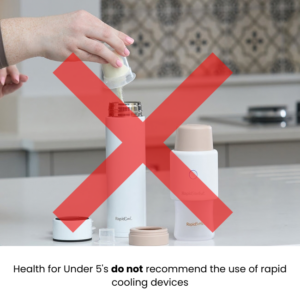
This has led to an increase in the use of ‘rapid cooling devices’, which are designed to cool freshly made formula quickly. Health for Under 5’s does not recommend the use of these devices.
What are the dangers of using rapid cooling devices?
Although these devices may seem convenient, using them means the formula is exposed to hot water for less time. This may allow some harmful bacteria to survive, which can cause serious illness in babies.
The devices are also yet to be tested to confirm their safety. Don’t believe any labelling on the product telling you that it is safe to use.
How should I cool infant formula?
Infant formula needs time to cool before it can be safely fed to a baby.
Formula can be cooled by holding the bottle (with the lid on) under cold running water. This allows more time for the formula to be exposed to bacteria-killing heat.



