- Your child has difficulty breathing (you may notice grunting noises or their stomach sucking under their ribcage), breathlessness or breathing very fast
- They have a seizure for the first time
- They are drowsy and hard to wake
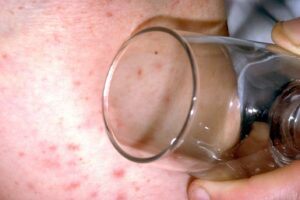
- They have a rash that does not fade when you press a glass against it
- They have a stiff neck
- They are bothered by light
- They have unusually cold hands and feet
- You notice changes to their skin colour such as blue, grey, paler than usual or blotchy skin (this may be harder to see on brown or black skin), or blue, grey or paler than usual lips or tongue
- They are extremely agitated (won’t stop crying) or confused
- They aren’t responding like they normally do, or aren’t interested in feeding or normal activities
- You have serious or urgent medical concerns about your child
- Your child is under 3 months old and you suspect they have a fever
- Your child has a temperature of 39 degrees Celsius or above.
- Your child has other signs of illness alongside the fever, such as a rash
- The fever has lasted five days or more
- Your child does not want to eat or is not their usual self
- Your child is dehydrated – signs include nappies that aren’t very wet, sunken eyes and no tears when crying.
Most babies won’t have any adverse reactions to immunisations. After a vaccination your baby may be upset and cry for a while, although this should settle after a cuddle and a feed. Learn more about coping with crying here.
Vaccinations won’t give your child the illness they protect against, instead they safely train their immune systems to recognise and fight the illness when they come into contact with it. For this reason, some babies may have mild reactions as their immune system responds.
Do not give your child a vaccine if they’ve had a serious allergic reaction to a previous dose of the vaccine or any ingredient in the vaccine.
You can search and check vaccine ingredients on the medicines.org website here.
Always speak to a medical professional if you’re concerned.
Here are some things to look out for if your baby seems unsettled or uncomfortable following their jabs. Scroll down to find some common side effects of each vaccine.
Some babies may have some swelling, redness or a small hard lump where the injection was administered – this might be sore to touch. Reactions such as these only tend to last a few days and won’t need treatment.
If you’re concerned, speak to a health professional.
A fever is a temperature over 38 degrees Celsius, they are quite common in young children and can occur after any vaccination. If your child’s face, back or chest seems hot to the touch and they look red or flushed, it may be a fever. You should check their temperature with a thermometer.
If you suspect or know that your child has a fever:
Do
- Continue to breastfeed as normal
- Give your child plenty of fluids
- Keep them at home
- Give them infant paracetamol or ibuprofen if they’re uncomfortable, check with a pharmacist to make sure the medicine is suitable for your child. Don’t alternate ibuprofen and paracetamol unless advised to by a health professional.
Don’t
- Don’t give ibuprofen to a child who is under 3 months old, under 5kg in weight or to any child with asthma, chickenpox or signs of dehydration.
- Don’t give aspirin to a child under 16
- Don’t put them in a bath
- Don’t cover them up with too many clothes or bedclothes. Always follow safe sleep advice.
- Don’t undress your child or sponge them down
- Don’t use a fan to cool them down
Speak to a GP or call 111 if:
- Your child is under 3 months old and you suspect they have a fever
- Your child has a temperature of 39 degrees Celsius or above.
- Your child has other signs of illness alongside the fever, such as a rash
- The fever has lasted five days or more
- Your child does not want to eat or is not their usual self
- Your child is dehydrated – signs include nappies that aren’t very wet, sunken eyes and no tears when crying.
Call 999 or visit A&E if:
- Your child has difficulty breathing (you may notice grunting noises or their stomach sucking under their ribcage), breathlessness or breathing very fast
- They have a seizure for the first time
- They are drowsy and hard to wake
- They have a rash that does not fade when you press a glass against it
- They have a stiff neck
- They are bothered by light
- They have unusually cold hands and feet
- You notice changes to their skin colour such as blue, grey, paler than usual or blotchy skin (this may be harder to see on brown or black skin), or blue, grey or paler than usual lips or tongue
- They are extremely agitated (won’t stop crying) or confused
- They aren’t responding like they normally do, or aren’t interested in feeding or normal activities
- You have serious or urgent medical concerns about your child
Your child might have diarrhoea after the rotavirus vaccine. In rare cases, the vaccine may affect your baby’s lower gut.
Speak to a GP or call 111 immediately if your baby has had the rotavirus vaccine and has:
- Tummy pain
- Vomiting
- A substance that looks like redcurrant jelly in their nappies
Click here to read more about the side effects of the rotavirus vaccine
The MMRV protects against 4 illnesses that can cause reactions at different times after the injection (measles, mumps, rubella and chickenpox). These mainly occur after the first dose.
The vaccine will not give your child any of these illnesses. It does not cause autism.
The measles part of the vaccine begins to work 6-10 days after the jab. 1 in 10 children might develop a fever and may be reluctant to feed. Some develop a measles-like rash which isn’t contagious.
The mumps and rubella parts of the vaccine start to work 2-3 weeks after the immunisation.
Some children may develop a few chickenpox-like spots at the injection site and the spots may contain the chickenpox virus. As long as the spots are covered with clothing, children can go to nursery as normal if they are feeling well.
Some children may experience vomiting and/or diarrhoea.
Around 1 in 1000 children may have a seizure caused by a fever following their first dose of MMRV, usually in the second week after the vaccine. You should seek immediate medical attention if your child has a fit.
In very rare cases, encephalitis has been reported after the MMRV – this mainly affects children with a severely weakened immune system. Speak to a health professional if you have questions or concerns.
Read more about side effects of the MMRV vaccine here.
Fevers are especially common when the MenB vaccine is given with other vaccinations at 2 and 4 months of age.
The fever shows your baby’s body is responding to the vaccine, although not getting a fever doesn’t mean the vaccine hasn’t worked.
Giving your baby infant paracetamol (such as Calpol) will reduce the risk of fever, pain at the injection site and general discomfort following the vaccination.
You should give the first dose of paracetamol as soon as possible after your 2-month vaccination visit. You should then give the second dose 4 to 6 hours later and the third dose 4 to 6 hours after that. You will need to follow the same steps after your baby’s 4-month vaccinations.
The nurse will give you more information about paracetamol at your vaccination appointment and you may be given a leaflet to take away with you with written instructions.
Never give medicines containing aspirin to children under 16.
Following the MenB vaccine, your child may also:
- have sore joints or a sore head
- get a rash (this is more common in children aged 1-2 years)
- have diarrhoea and/or vomiting
Read more about possible side effects of the MenB vaccine here.
Useful links
 Should you need urgent health advice please contact your GP or call NHS 111. In an emergency please visit A&E or call 999