 Should you need urgent health advice please contact your GP or call NHS 111. In an emergency please visit A&E or call 999
Call 111 or speak to a GP as soon as possible if
- You think your newborn baby has chickenpox or has been near someone with chickenpox
- You’re pregnant, have never had chickenpox before (or you’re not sure) and have come into contact with someone with chickenpox
- You or your child have a weakened immune system and have come into contact with someone with chickenpox
- Your or your child’s chickenpox symptoms suddenly get worse
- Your child has chickenpox and is showing signs of dehydration, such as fewer wet nappies
- The skin around the chickenpox blisters is hot, painful and red (redness may be harder to see on brown or black skin)
- You’re breastfeeding and have chickenpox symptoms
- You’re concerned about yourself or your child
Some people may be able to take medicine to prevent complications. It needs to be started within 24 hours of the spots appearing.
You can call 111 or get help from 111 online. Call 111 if you need advice for a child under 5 years old.
Chickenpox (varicella) is common, especially in children.
Symptoms of chickenpox
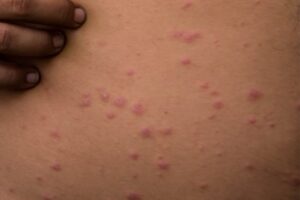
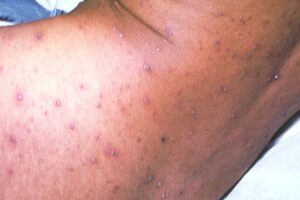
It starts with red itchy spots, these can appear anywhere on the body and can spread or just stay in one area. They may be red, pink, darker or the same colour as surrounding skin. The spots can be harder to see on black or brown skin.
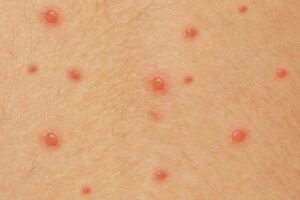
These spots blister and fill with fluid before they scab over, new spots can appear whilst others are blistering.
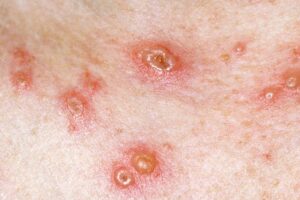
Take a look at the images below showing the stages of chickenpox.
Stage 1 – Small spots appear:
Stage 2 – The spots become itchy blisters that may burst:
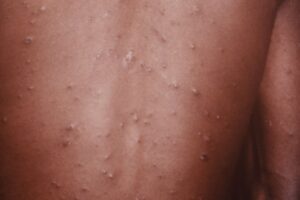
Stage 3 – The blisters become scabs, some may be flaky and others may leak fluid:
Your child may also experience aches and pains, a high temperature or loss of appetite – these symptoms may occur before the rash appears.
Not sure if it’s chickenpox? Click here for more information on rashes in babies and children.
How is chickenpox spread?
Chickenpox is highly contagious, it can be caught by being in the same room as someone with it, so your child will need to stay away from school or nursery until all spots have crusted over.
You can also catch the illness from touching surfaces or objects contaminated with fluid from chickenpox blisters.
If you’ve never had chickenpox before, it can be caught from someone who has shingles. You can’t catch shingles from someone with chickenpox.
Chickenpox can be caught more than once, but this is unlikely. It can be treated from home and most people won’t need to speak to a GP.
Chickenpox vaccine
Getting your child vaccinated with the MMRV vaccine increases their immunity and helps to prevent the spread of the virus.
The MMRV has replaced the MMR vaccine in the NHS vaccination schedule for younger children. This new vaccine protects against measles, mumps, rubella and chickenpox (varicella). Read more information about the vaccine here.
They are offered 2 doses of the vaccine when they are 12 months and 18 months old. Older children born on or after 1 January 2020 are also offered 1 or 2 doses of the vaccine.
You may also be offered the chickenpox vaccine on the NHS if there’s a risk you could spread the virus to someone who has a weakened immune system.
Tips for treating chickenpox from home
- Speak to a pharmacist about cooling creams, gels or medicine available over the counter
- Bathe your child in cool water and pat their skin dry (do not rub)
- Give your child plenty of fluid to avoid dehydration
- Cut your child’s fingernails and put socks on their hands at night to avoid them scratching
- Dress your child in loose clothes
DO NOT:
- use ibuprofen unless advised to do so by a doctor, as it may cause serious skin infections
- give aspirin to children under 16
- mix with pregnant women, newborn babies and people with a weakened immune system, as chickenpox can be dangerous for them
- scratch the spots, as this can cause scarring
Speak to a GP or 111 as soon as possible if:
- You think your newborn baby has chickenpox or has been near someone with chickenpox
- You’re pregnant, have never had chickenpox before (or you’re not sure) and have come into contact with someone with chickenpox
- You or your child have a weakened immune system and have come into contact with someone with chickenpox
- Your or your child’s chickenpox symptoms suddenly get worse
- Your child has chickenpox and is showing signs of dehydration, such as fewer wet nappies
- The skin around the chickenpox blisters is hot, painful and red (redness may be harder to see on brown or black skin)
- You’re breastfeeding and have chickenpox symptoms
- You’re concerned about yourself or your child
Some people may be able to take medicine to prevent complications. It needs to be started within 24 hours of the spots appearing.
You can call 111 or get help from 111 online. Call 111 if you need advice for a child under 5 years old.
Useful links
NHS – The MMRV vaccine
NHS – Chickenpox


