Should you need urgent health advice please contact your GP or call NHS 111. In an emergency please visit A&E or call 999
Supporting your baby to feed as effectively as possible.
All images are curtsey of; LactaMedia – A Clinical Image Collection is published on LactaHub, a partnership project of The Global Health Network (University of Oxford) and the Family Larsson-Rosenquist Foundation. © Family Larsson-Rosenquist Foundation
Introduction
What is expected growth and weight gain for a baby
It’s normal for newborns to lose up to 10% of their birth weight in the first few days after birth. However, babies are expected to gain weight from day 5, regain their birth weight by 2 to 3 weeks of age and then track their centile on the chart in the red book. Some movement on the growth chart may not be a concern, especially if there is an explanation, such as a period of illness.
It’s common to worry about your baby getting enough milk. Below we will explore the difference between your concerns about weight gain and milk supply and the clinical signs of an actual low supply.

Worried about weight and milk supply
It’s common for parents to worry about milk supply, especially when babies seem unsettled or want frequent closeness. This behaviour is normal and not always linked to feeding issues. At around 4–6 weeks, breasts naturally soften as supply regulates, which can also cause concern. The breastfeeding assessment in the red book can help you check expected feeding patterns, nappy output, and behaviour.
If your baby is:
- following its centile and growing as expected
- feeding 8-12 times in 24 hours, (see red book breastfeeding assessment)
- you’re comfortable
- your baby is settled at the breast
your baby is getting enough milk and you do have a full milk supply
Seek support if you’re struggling with the needs of a new baby, unsure or worried about feeding. Details of local support are at the end of this page.
When to seek help about weight gain and milk supply
If your baby has not returned to birth weight by 3 weeks or has fallen through one or more centiles they may not be growing as well as expected. It’s important to seek skilled support. You will be be offered a full feeding assessment, an opportunity to share to your priorities, and practical tips to help your baby feed more effectively. You may benefit from learning techniques to support breastfeeding and increase milk supply. We work with you to find solutions and techniques that work for you and help your baby get all the milk they need.
Where to seek help and support
We are here to support you during Healthy Child Programme (HCP) routine appointments. You can also access our MILK drop ins, which include support from health professionals, peer support and the specialist infant feeding team.
What support may include
Small changes can make a big difference. We always begin with listening to you, observing a feed, and supporting effective breastfeeding through attention to how baby latches to the breast, your comfort, feeding frequency, offering both breast and responding to feeding cues.
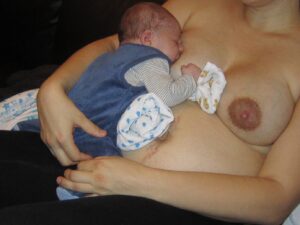
Plan 1 – making sure your baby is feeding as effectively as possible
Effective positioning and attachment
Positioning is the relationship between the mother and baby’s body and how the mother holds the baby to help them to attach effectively to the breast.
You and your baby may choose different positions depending on where you are feeding or whether it is a day or night time feed.
Attachment is how the baby takes the breast into their mouth to enable them to feed.
It is crucial for baby to get the attachment right to enable them to access sufficient milk to help them grow, which will in turn influence their mother’s milk supply. Ineffective attachment can also lead to sore nipples, blocked ducts and mastitis.

Positioning
- find a position that is comfortable for you, have snacks and drinks within reach. Look to have full body contact with your baby and that the baby is facing the breast, with their head, neck and hips in line; this means your baby is close and supported
- skin to skin and being in a semi reclined position reinforces a baby’s newborn feeding reflexes
- a baby finds a breast through touch and smell not sight, so allow your baby’s hand to be free
- babies will root, bobbing their heads searching for the curve of the breast. When they feel pressure on their chin they will gape and tip their heads back
- ensure your baby’s head is free to tip back enabling them to get into a good position to attach to the breast
How babies attach to the breast
- the chin touches the breast first, 2-3 cm away from the base of the nipple
- the top lip slides up and over the nipple
- generally, more areola is visible above the top lip than below the chin, so that latch appears off centre
- the baby will have full rounded cheeks
- the chin will be indenting the breast and nose will be free
- it is likely that you won’t be able to see the baby’s lips (you don’t need to move the baby to check them, it may change their attachment)
Useful videos
- positioning for breastfeeding
- Attaching Your Baby at the Breast – Video – Global Health Media Project
- laid back feeding
SCFT Healthy Child Programme staff are trained to support you with attachment and positioning and use the acronym CHINS, you will see this on your red book.
- C Close
- H Head free to tilt back
- I In line
- N Nose to nipple
- S Sustainable
Effective breastfeeding
You can expect to see rapid sucks at the beginning of the feed as your baby stimulates the milk to flow, followed by deep rhythmical sucking with some pauses.
A baby will stimulate more than one milk ejection during a feed; the flow will then start to slow, and the baby may be ready for the other side.
As the feed comes to an end, the sucking will become less regular with longer pauses. If the baby becomes fidgety or restless it can be a sign that they ready for the other breast.
Typically, babies come off the breast themselves and will appear relaxed and contented.
Effective attachment means a feed will be comfortable, nipples will be the same shape after a feed but slightly longer and your baby will be able to transfer milk effectively.

Skin to skin
Skin-to-skin contact is valuable at any time to help settle and calm a baby and is a special time that promotes a positive parent-baby relationship. Skin to skin is a term we use to describe a baby in a nappy on the mother or care giver, on their chest, directly against their skin, often with a light cover over the baby.
Skin to skin allows your baby to hear the familiar sound of your voice and heartbeat. It promotes the release of hormones which have a calming, soothing effect on both you and your baby.
Skin to skin can help you to get to know your baby and fulfil their need for love, comfort and food. It is also something your partner can enjoy with baby. It is important to note that you can’t spoil a baby by cuddling them and spending time together.
Skin to skin supports learning to breastfeed, initiating strong instinctive behaviours. It is valuable for all babies regardless of how they are fed.
Find out more about skin to skin here
How often and when to feed
You will want to encourage your baby to feed as often as possible, while you are working to increase your milk supply. Feeding cues are a baby’s way of communicating they want to breastfeed, including your baby turning their head and opening their mouth (rooting), licking lips, mouthing hands, restlessness and making small sounds. Early feeding cues are your baby calmly communicating a need to feed, this is the easiest time to feed your baby. The movements will get bigger as the baby moves through the feeding cues, some babies do this very quickly and others take their time. Crying is a late feeding cue, although sometimes this may happen earlier, it can make feeding your baby more challenging, particularly when you are both learning. If your breasts are feeling full or you just feel like feeding your baby, you can offer your baby a feed, even if they are not asking.
- Feeding cues can be missed if using swaddling, a dummy use during awake times, or a swing.
- Discontinue water or other low-calorie supplements, if used
- Don’t watch the clock – watch your baby and count feeds. Breastfeeds often are not regularly spaced (e.g. every 2-3 hours). Most young babies need at least 8-12 feeds in 24 hours. Your baby just needs to have enough feeds in 24 hours, whenever they are awake enough and interested

Keep your baby feeding actively when they are at the breast
While you are working to increase your milk supply, you want to be sure that milk is being removed as effectively as possible. It is helpful to be able to identify if your baby is actively feeding, it is likely you will be able to see or hear this. Look for big jaw movements and swallowing after every one-two sucks. If they are mostly doing fluttery, light sucks and little swallowing (three or more sucks per swallow), they will be removing less milk than needed. If your goal is to increase how much milk is being removed, you may have discussed a plan to end the feed at this point and use a breast pump instead to maximise efficient milk removal.
Breast compressions and switch feeding can help to keep your baby actively feeding for longer. Start compressing your breast as soon as your baby stops actively feeding. You can find out how to do breast compression here.
When your baby is no longer actively feeding even with compressions, repeat them whilst feeding on the other breast. Once they slow again, you can switch back to the first breast. Repeat as needed until your baby is full, or stops being willing to feed.
Some parents may want to start expressing milk at this point, sometimes it will be suggested to start some hand expressing or pumping at this point, depending on the cause of the slow weight gain. There is further information about doing this in Plan 2.
Risk factors for low milk supply
These include:
- Hormonal conditions like thyroid problems or polycystic ovary syndrome (PCOS).
- Unusually small/thin/unequally sized/widely spaced breasts
- Previous breast surgery (especially reduction) or radiation
- Retained placenta
If you have any risk factors for low milk supply, you may need to add the techniques described in Plan 2. Please discuss with the health professional supporting you.
📍 Visit your local MILK! drop-in sessions
Infant Feeding Support -Sussex Health for under 5s. – Sussex | Health for under5s
📞 Speak to your midwife, health visitor or GP
Call the National Breastfeeding helpline 0300 100 0212
Sussex Community is responsible for the writing, publishing and updating of the content on this page.