Should you need urgent health advice please contact your GP or call NHS 111. In an emergency please visit A&E or call 999
What is it?
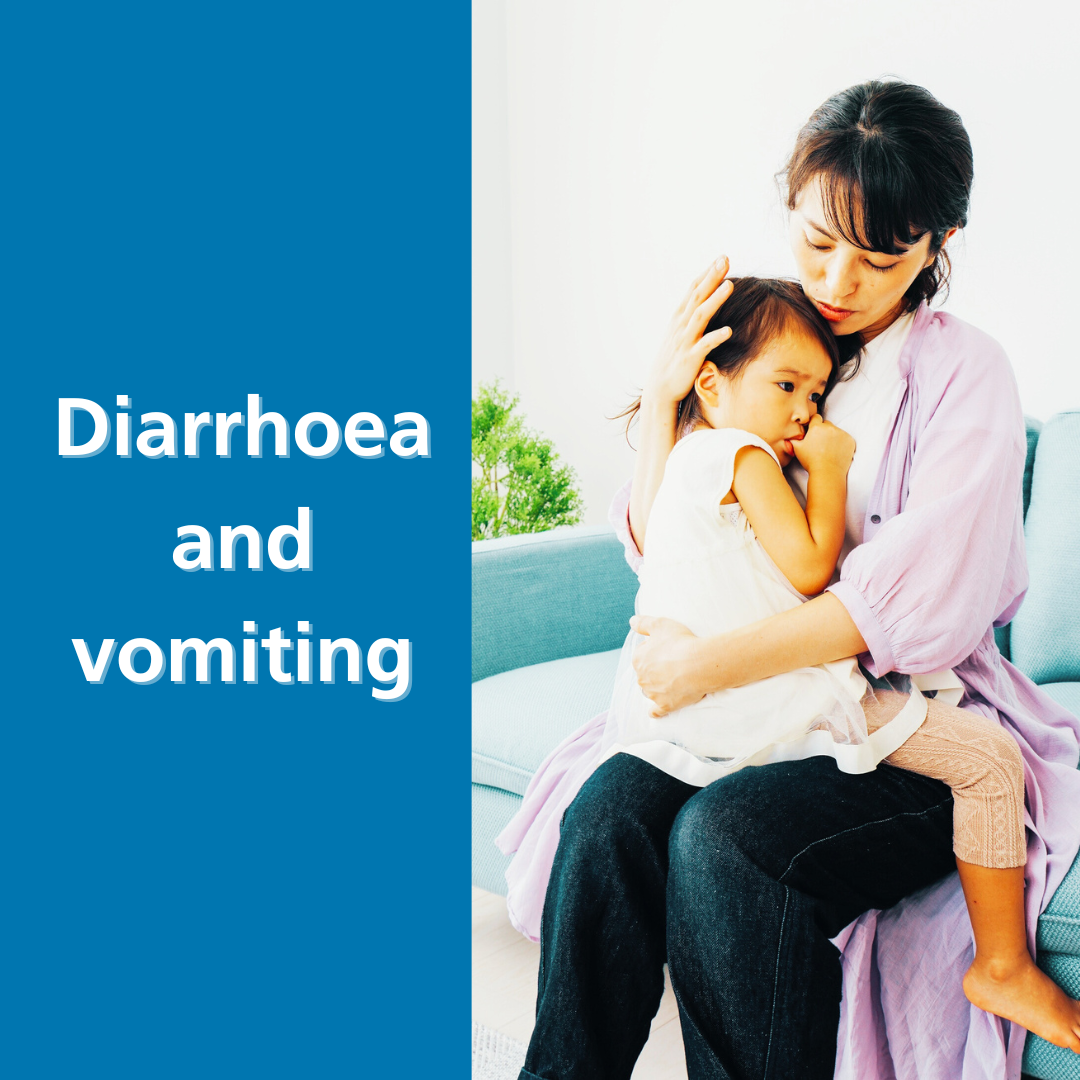
Gastroenteritis is an upset tummy that can cause diarrhoea and/or vomiting. It is caused by viruses, is often mild and can usually be managed at home.
- Your child may first have tummy ache and fever
- Most children with diarrhoea and vomiting get better very quickly, but some children can get worse.
- Diarrhoea usually lasts five to seven days but may continue for up to two weeks.
- Vomiting usually does not last for more than three to four days.
Caring for your child at home
Reducing fever and pain relief for tummy aches
- Liquid paracetamol and ibuprofen can be given according the instructions on the bottle (Ibuprofen is not recommended if your child has asthma unless you have discussed with the doctor)
Keep a record
- It is useful to keep a record of the number of drinks and the number of wees/ wet nappies that your child/baby has had each day.
Preventing Dehydration
It is very important to follow the advice below to prevent dehydration in your baby/child.
One of the main risks of gastroenteritis in children, especially babies, is that they may become dehydrated:
- It is important to replace fluid your child will be losing due to vomiting and/or diarrhoea.
- It is OK if they do not want to eat. Drinks are most important, and most will start eating when they feel better.
- Continue to breast/bottle feed your baby.
- For a child under one, give small sips every few minutes (using a teaspoon or a plastic syringe and aim fluids into side of mouth to ease swallowing).
- For all children, give drinks little and often e.g. every 10 mins (or as advised by a doctor). If they are thirsty and take too much at a time, it may cause them to vomit.
- For older children, try using ice lollies or encourage drinking through a straw.
- Unwell children will often refuse fluids, but can be persuaded if you persevere.
- Oral rehydration solutions such as Diaorlyte or Electrolade should not be used in infants under three months without agreement from the doctor.
Type of fluids
- Good fluids: Oral rehydration sachets, water, squash (not sugar free), milk.
- Bad Fluids: Juice, fizzy drinks which make diarrhoea worse.
Signs of Dehydration
- Dry mouth
- Dry tongue and lips
- Less tears when crying
- Sunken eyes
- Passing less urine than normal
- Weakness
- Being irritable or lethargic
Worried about your child?
Use traffic light advice

GREEN: If your child has none of the symptoms in the amber or red categories, continue to look after them at home

AMBER: If your child has ANY of these
- Appears to be getting worse or if you are worried
- OR is getting more thirsty despite drinking
- OR is not drinking
- OR has signs of dehydration (see above)
- OR blood in their poo
- OR 6+ bouts of diarrhoea in 24 hours
- OR 3+ vomits in 24 hours
- OR has a high temperature
- OR is in constant pain
YOU NEED TO SEEK MEDICAL ADVICE: Please call NHS helpline 111.

RED: If your child has signs of dehydration AND becomes unresponsive
- OR is breathing faster than usual
- OR has unusually pale or mottled skin
- OR has colder hands and feet than normal
YOU NEED EMERGENCY HELP CALL 999: You need to be seen at an emergency department (A&E).
Nottinghamshire Healthcare NHS Foundation Trust is responsible for the writing, publishing and updating of the content on this page.